Separation Anxiety Disorder
17 Saturday Nov 2012
Posted in Anxiety

17 Saturday Nov 2012
Posted in Anxiety
12 Friday Oct 2012
Posted in Brain Imaging and Counseling
12 Friday Oct 2012
Posted in Brain Imaging and Counseling
12 Friday Oct 2012
Science and Spirituality in Conversation: The Shape of the Soul from Advent DC on Vimeo.
Hosted by Trinity Forum and Church of the Advent
Speaker: Dr. Curt Thompson and James K.A. Smith
Washington, DC
August 21, 2012
Rachel Hofer
06 Saturday Oct 2012
Posted in Christian Counseling
Running this event for the SECOND time 4/14/13 Sunday at 1pm. In Little Hall room 113 at University of Florida.
God and Mental Illness
Mental illness is a taboo subject and not really talked about at church. Join us for a discussion on what the bible says about mental illness and what God wants to teach us. Free snacks will be provided.
October 13, 2012 2:00 at the Reitz Union on the University of Florida Campus Room 355 Hosted by Susette Lopez and Tim Edminster
Rachel Hofer, MS and other speakers to be announced.
Check the facebook page at: http://www.facebook.com/events/380102402063338/
Also- 2nd Week! Call to join!
Please contact Rachel if you are interested in these support groups:
Mental Health Grace Alliance Support Group
This is a support group for those living with a mental illness that want to find support within a Christian context. Often mental illness can be very isolating even within the church. Here is a place to find community within the church that understands. Social hour at 6:30pm in the kitchen and dining area.
Family Members Support Group
This is a support group for family members of those living with a mental illness that want to find support within a Christian context. Often mental illness can be very isolating even within the church. Here is a place to find community within the church that understands. Feel free to come at 5:30pm to hang out in the dining and kitchen area.
“Seductively complicated, a distillation both of what is finest in our natures, and of what is most dangerous. In order to contend with it, I first had to know it in all of its moods and infinite disguises, understand its real and imagined powers. Because my illness seemed at first simply to be an extension of myself- that is to say, of my ordinarily changeable moods, energies, and enthusiasms- I perhaps gave it at times too much quarter.” Kay Redfield Jameson in her book An Unquiet Mind
Rachel Hofer
14 Thursday Jun 2012
Posted in Christian Counseling, Self Esteem
Tags
Beauty, Child Abuse, Domestic Violence, Forgiveness, Modeling, Physical Abuse, Self Esteem, Supermodel
In my masters program I sat next to this woman for a whole semester and worked on a project with her. We created the Orlando Dream Center for Girls to help teen girls with the many many issues and disorders that relate to self esteem. I knew she was gorgeously beautiful but I had no idea she was a super model with an amazing story to tell!
Jennifer Strickland is another model with a great story of her journey with her self-esteem.
For more info from Rachel Hofer check www.lovingtherapy.com
04 Monday Jun 2012
Posted in Personality Type
10 Tuesday Apr 2012
Posted in Drama and Counseling
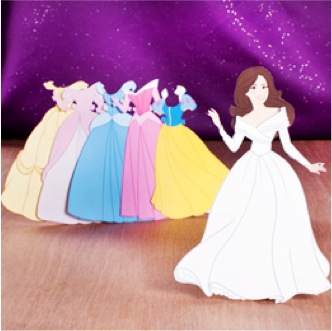
Cinderella expresses anger at the clock tower telling her what to do just like her step-sisters and step-mother. Anna Freud might call this a defense mechanism, ‘displacement’, and it definitely serves its purpose in handling anger if used appropriately! Sigmund Freud referred to ‘sublimation’, a spiritual redirection or displacement that “serves a higher cultural or socially useful purpose, as in the creation of art or inventions.”
In response to the step-sister’s mocking her she stands up for her rights. “Well, Why not? After all I’m still a member of the family. And it says by Royal command every eligible maiden is to attend.”
Without the communication skills, assertive behavior, a lot of patience and humility, we can only imagine how Cinderella would respond to such abuse. It actually might make for an entertaining comedy or tradgedy in another version of “Cinderella II.”
Assertiveness is the ability to express yourself, your rights, and maintain dignity without violating the rights or dignity of others.
“The vices that make good theater are intolerable in life, and the banality of goodness on stage is no argument against the virtues.” Simone Weil
For more info from Rachel Hofer check www.lovingtherapy.com
08 Sunday Apr 2012
Posted in DSM
Read the full article from Psychology Today Magazine here: http://www.psychologytoday.com/blog/dsm5-in-distress/201111/counselors-turn-against-dsm-5
“Definition of Mental Disorder. The DSM-5 Task Force has proposed a new definition of mental disorder which includes, “A behavioral or psychological syndrome or pattern that occurs in an individual that reflects an underlying psychobiological dysfunction” (APA, 2011). Using the term psychobiological implies that all mental disorders have an underlying biological component. Although advances in neuroscience have greatly enhanced our understanding of psychopathology, the current science does not fully support a biological connection for all mental disorders. We therefore request that the definition of mental disorder be amended to indicate that mental disorders may not have a biological component.”
“Although the DSM-5 Task Force has described its development process as “open, transparent and free of bias” (Kupfer & Regier, 2009, p. 40), all work group members were required to sign confidentiality agreements that prohibit them from divulging information about the DSM-5 process, even after it is published.”
For more info from Rachel Hofer check www.lovingtherapy.com
07 Saturday Apr 2012
Posted in Addiction
When we take on responsibilities that belong to others we can take on anxiety and stress that affect our health and ability to help those in ways that empower them. We forfeit healthy relationships. Sometimes helping others can be stressful and burdensome, but when we are hurting ourselves rather than excercising our ability, losing our ability to be helpful, or are enabling someone to be irresponsible we need become aware of our motives and to stop. This is something everyone struggles with and for some people it is a chronic issue related to “codependency”.
“What’s a codependent? The answer is easy. They’re some of the most loving, caring people I know.” Lonny Owen
Some of the oppressive rules of codependency from the book Beyond Codependency by Melody Beattie (p. 16)
-Don’t feel or talk about feelings
-Don’t think
-Don’t identify, talk about, or solve problems
-Don’t be who you are-be good, right, strong, and perfect
-Don’t be selfish-take care of others and neglect yourself
-Don’t be vulnerable
-Don’t be direct
-Don’t get close to people
-Don’t grow, change, or in any way rock the family’s boat
And some of the core beliefs:
-I’m not lovable
-I don’t deserve good things
-I’ll never succeed
 Loving Therapy™