Mental health is a vital part of overall well-being, yet finding the right support can be challenging. In Cocoa Beach, FL, residents have access to a variety of mental health resources tailored to different needs.
Community center in Cocoa Beach offering mental health support
Local Mental Health Clinics and Counseling Services
Cocoa Beach has several clinics and counseling centers that provide professional mental health care. These facilities offer services such as individual therapy, group counseling, and crisis intervention.
Brevard Counseling Center
Located nearby, this center offers affordable therapy sessions for anxiety, depression, and trauma. They accept various insurance plans and provide sliding scale fees.
Space Coast Mental Health Services
This organization focuses on community outreach and support for those facing substance abuse and mental illness. They provide case management and psychiatric services.
Cocoa Beach Wellness Center
A holistic approach to mental health, combining counseling with wellness activities like yoga and meditation classes.
These centers emphasize personalized care and community connection, making them valuable resources for residents seeking face-to-face support.
Support Groups and Community Programs
Support groups provide a safe space to share experiences and gain encouragement from others facing similar challenges. Cocoa Beach offers several options:
NAMI Brevard County Support Groups
The National Alliance on Mental Illness hosts regular meetings for individuals and families affected by mental health conditions. These groups focus on education and peer support.
GriefShare
For those coping with loss, GriefShare offers weekly sessions that help participants process grief and find hope.
Veterans Support Groups
Local veteran organizations run mental health support groups tailored to the unique challenges faced by military service members.
Community programs often include workshops on stress management, parenting, and mindfulness, which can complement formal therapy.
Online and Telehealth Options
Telehealth is a good option after stabilization (not in a crisis) to heal and for ongoing care.Technology has expanded access to mental health care beyond local areas.
Many local providers now offer teletherapy sessions, allowing clients to receive counseling from home.
Online platforms connect residents with licensed therapists for flexible scheduling.
Virtual support groups and workshops help maintain community connections without geographic barriers.
Telehealth options increase convenience and reduce stigma by offering private, accessible care.
Loving Therapy™ Telehealth Services
In addition to our local office, for those who prefer or require remote access to mental health care, Loving Therapy™ stands out as a compassionate telehealth option based in Florida. Unlike large online telehealth companies, Loving Therapy™ focuses on personalized care with licensed therapists who understand local community needs.
What Loving Therapy™ Offers
Licensed Therapists
All therapists are fully licensed and trained in evidence-based practices.
Flexible Scheduling
Sessions can be booked outside typical office hours, making it easier to fit therapy into busy lives.
Secure and Private
The platform uses encrypted video calls to ensure confidentiality.
Wide Range of Services
Therapy for anxiety, depression, relationship issues, trauma, and more.
Affordable Options
Sliding scale fees and payment plans are available to reduce financial barriers.
Loving Therapy™ allows residents of Cocoa Beach to access quality mental health care without the need to travel or wait for in-person appointments.
Crisis Resources in Cocoa Beach
In urgent situations, immediate help is crucial. Cocoa Beach residents can turn to these resources:
Brevard County Crisis Line
Available 24/7 for anyone experiencing a mental health emergency. Trained counselors provide support and connect callers to emergency services if needed.
Crisis Stabilization Units
Facilities offering short-term care for individuals in acute distress, helping stabilize their condition before transitioning to ongoing treatment.
Local Hospitals
Emergency departments at nearby hospitals have psychiatric units equipped to handle mental health crises.
Knowing where to turn during a crisis can save lives and reduce trauma.
Tips for Finding the Right Mental Health Support
Choosing the right mental health resource depends on individual needs and preferences. Here are some tips for Cocoa Beach residents:
Assess Your Needs
Consider whether you want in-person or remote therapy, the type of support needed, and your budget.
Check Credentials
Verify that therapists and counselors are licensed and have experience with your specific concerns.
Ask About Approaches
Different therapists use different methods. Find one whose style matches your comfort level.
Look for Community Connections
Providers familiar with Cocoa Beach and Brevard County can offer more relevant support.
Use Telehealth When Needed
Loving Therapy™ offers a convenient alternative if transportation or scheduling is a barrier.
Encouraging Mental Health Awareness in Cocoa Beach
Mental health stigma can prevent people from seeking help. Community efforts in Cocoa Beach aim to raise awareness and promote open conversations.
Public Workshops
Events on topics like stress reduction and mental wellness are held at libraries and community centers.
School Programs
Local schools incorporate mental health education to support students and families.
Local Media
Articles and radio segments highlight mental health resources and stories of recovery.
These initiatives help create a supportive environment where mental health is treated with the same importance as physical health.
Mental health challenges affect many people, yet finding the right support can feel overwhelming. In Tampa, Florida, a variety of community mental health resources offer accessible, compassionate care. These local services provide counseling, crisis intervention, support groups, and more, tailored to the needs of Tampa residents. This post highlights some of the key resources available in the area, including contact information and what each service offers.
Tampa Bay Community Mental Health Centers
Tampa Bay has several community mental health centers that provide affordable and comprehensive care. These centers often accept Medicaid and offer sliding scale fees based on income, making mental health support more accessible.
Bay Area Mental Health Services
Services: Individual and group therapy, psychiatric evaluations, medication management, crisis intervention
Location: Multiple locations across Tampa Bay area
Bay Area Mental Health Services focuses on treating adults and children with mental health disorders, substance use issues, and co-occurring conditions. They also provide outreach programs to connect with underserved populations.
Hillsborough County Crisis Center
Services: 24/7 crisis hotline, walk-in crisis stabilization, mobile crisis response
This center offers immediate help for individuals experiencing a mental health emergency. Their mobile crisis team can respond in the community, helping to de-escalate situations and connect people to ongoing care.
Nonprofit Organizations Supporting Mental Health
Several nonprofits in Tampa provide specialized mental health services, peer support, and education.
NAMI Tampa Bay (National Alliance on Mental Illness)
Services: Peer-led support groups, family education, advocacy, mental health awareness events
NAMI Tampa Bay offers free support groups for people living with mental illness and their families. Their programs help reduce stigma and provide practical tools for managing mental health conditions.
The Spring of Tampa Bay
Services: Counseling for survivors of domestic violence and sexual assault, crisis intervention, support groups
The Spring provides trauma-informed mental health services, focusing on survivors of abuse. Their counseling and advocacy services are confidential and free of charge.
Support for Youth and Families
Mental health resources for children and families are vital in Tampa, with several organizations dedicated to early intervention and family support.
Metropolitan Ministries Mental Health Program
Services: Counseling for children and families, case management, parenting support
Metropolitan Ministries offers mental health counseling as part of their broader support services for families experiencing homelessness or financial hardship. Their programs aim to stabilize family environments and promote emotional well-being.
Hillsborough County Schools Mental Health Services
Services: School-based counseling, crisis intervention, behavioral support
Contact: (813) 272-4000 (Hillsborough County Public Schools main line)
The school district provides mental health support within schools, helping students manage stress, anxiety, and other challenges. They collaborate with community providers to ensure students receive ongoing care.
Specialized Mental Health Services in Tampa
Some organizations focus on specific populations or conditions, offering tailored mental health care.
Veterans Affairs Outpatient Clinic Tampa
Services: Mental health counseling, PTSD treatment, substance use support for veterans
JFCS offers culturally sensitive mental health services to the Tampa community, welcoming people of all backgrounds.
Online and Telehealth Options
Telehealth is a good option after stabilization (not in a crisis) to heal and for ongoing care.Technology has expanded access to mental health care, especially important in Tampa’s diverse community.
Many local providers now offer teletherapy sessions, allowing clients to receive counseling from home.
Online platforms connect residents with licensed therapists for flexible scheduling.
Virtual support groups and workshops help maintain community connections without geographic barriers.
Telehealth options increase convenience and reduce stigma by offering private, accessible care.
Loving Therapy™ Telehealth Services
In addition to our local office, for those who prefer or require remote access to mental health care, Loving Therapy™ stands out as a compassionate telehealth option based in Florida. Unlike large online telehealth companies, Loving Therapy™ focuses on personalized care with licensed therapists who understand local community needs.
What Loving Therapy™ Offers
Licensed Therapists
All therapists are fully licensed and trained in evidence-based practices.
Flexible Scheduling
Sessions can be booked outside typical office hours, making it easier to fit therapy into busy lives.
Secure and Private
The platform uses encrypted video calls to ensure confidentiality.
Wide Range of Services
Therapy for anxiety, depression, relationship issues, trauma, and more.
Affordable Options
Sliding scale fees and payment plans are available to reduce financial barriers.
Loving Therapy™ allows residents of Tampa to access quality mental health care without the need to travel or wait for in-person appointments.
How to Access These Services
Most community mental health providers in Tampa accept referrals from primary care doctors, schools, or self-referrals. It helps to call ahead to understand eligibility, insurance acceptance, and appointment availability. Many organizations offer sliding scale fees or free services for those in financial need.
If you or someone you know is in immediate crisis, calling the Hillsborough County Crisis Center or dialing 911 is the fastest way to get help.
Building a Support Network in Tampa
Beyond professional services, Tampa has peer support groups, wellness workshops, and community events that promote mental health. Connecting with others who understand your experience can be a powerful part of recovery.
Tampa Bay Mental Health Peer Support Groups: Check local libraries, community centers, or NAMI Tampa Bay for schedules.
Mindfulness and Wellness Classes: Offered by various nonprofits and community centers, these classes teach stress management techniques.
Final Thoughts on Tampa’s Mental Health Resources
Tampa offers a range of community mental health resources designed to meet diverse needs. From crisis intervention to ongoing counseling, local organizations provide vital support. Exploring these options can help you find care that feels personal, accessible, and effective.
If you are seeking mental health support, start by reaching out to one of the organizations listed here. Taking the first step to connect with local resources can open the door to healing and stronger well-being.
This is usually an essay question on a test for Career Development. It addresses some of the lies that were mentioned in a previous post. If you would like to read that post click here.
Our minds are more powerful than we realize when it comes to success.
Let’s start by opening up your mind a bit to see what’s already there in that box that says, “Career Journey.” Relax, sit back, and visualize:
Imagine you are in a boat going down a river that is your life and career. What do you see? Where are you headed? Who is on the sidelines cheering you on? Who is speaking to you from the shore and what are they saying? Is anyone in the boat with you? This is your career journey.
Okay. As far as Careers- there are many that may be a good fit for you. Just decide on one before you retire and we can talk about career matching for personality, skills, interests, and values in another post. Here in this visualization you see a situation you have. Now let’s look at some steps to put the wind in your sails.
Goals
Research shows that having goals is a huge factor in success (Canfield & Hansen, 1996; Gage, 2006; Hansen and Allen, 2002; Klauser, 2001; Matthews, 1990; Rutherford, 1998; McColl, 2007; Proctor, 1997; Vitale, 2008). We know that if you write down your goals you are much more likely to achieve them! When you write down your goals you become much more aware of them. They are reinforced in your mind. The first step is to be aware of your goals. If we do not have them there are thousands of voices we hear from our culture, friends, family, mentors, teachers, TV and the media, and our own hearts that will distract us from what we really want to do. Our own hearts often want to do things we really do not desire. Goals are the rudder to steer our boat in the right direction.
Goals may take some workto create. You need to discern what are desires, out of your control, and what are goals. Do you have a pie in the sky? Then you need to create achievable goals. They must be specific, measurable, attainable, and realistic. For example, if your goal is “I want to be an acrobat,” you may need to define what ‘acrobat’ means. Does it merely mean you can do a handstand or does it mean you are in a Cirque show? How will you know when you are an acrobat? What are the steps to take to become an ‘acrobat’?
In contrast, people have even died from having no meaningful purpose or goals. Can you think of what you have looked forward to in the mornings when you start your day over the last month? What has been on your schedule? What family time or vacation did you look forward to? How would you feel if you had no goals and no purpose for the day? Nothing to look forward to? Or what if your work felt pointless? An extreme case of how this affects people comes from, sad to say we even have this research, prisoners of war. In WWII Germans conducted experiments to see what would happen if prisoners were required to shovel and wheel dirt back and forth all day and many of the prisoners lost their minds, running from the work (Latham, 2007). Korean POWs lost hope, many developing ‘mirasmus’, the lack of the will to live, and died within two days (Schein, 1963). They just went in a corner, put a blanket over their head, and died (Blackett, 2011).
Self-Talk and the Voices of Outside Influences
Even once you have your goals, there is still a battle in the mind. We deal with self-talk on a constant basis that can either move us forward or drag us away from our goals. People often deal with the burden of ‘hand-me-down’ goals from parents or other people in their lives (Blackett, 2011). For example, that father who wants his son to be a doctor when all the son wants is to be an artist. Cognitive-Behavioral Therapy can help people to become more aware of and combat lies, automatic thoughts, rules, ‘shoulds’, and negative core beliefs that get in the way of success. Many people deal with negative core beliefs such as, “I am unlovable,” “I am worthless,” or “I am defective,” that were learned from early childhood experiences. This does not mean the parent, caregiver, friend, or experiences through which they learned these beliefs intentionally caused pain. However, the child’s understanding is limited and these negative beliefs stay with us a long time unless we become aware and address them. They become self-talk. Most of this is subconscious; that realm of the mind out of our conscious awareness that comes out in our dreams.
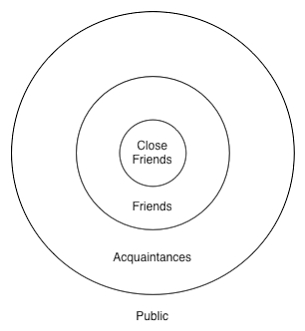
I once attended a hypnosis workshop where I gained insight into this idea of the subconscious. The presenter explained that no one can be hypnotized unless they want to be. To further elaborate, he drew a diagram of the theory of the mind that explains how hypnosis works. The theory of the mind shows that there are three circles- the critical mind which is conscious, then the subconscious which forms habits, then the unconscious that controls our automatic bodily functions. In order for hypnosis to work the subject must allow their critical mind down so that the power of suggestion can bypass the conscious mind and enter the subconscious to form habits and behavior. The presenter told stories even of how hypnosis and the power of suggestion penetrated the unconscious mind, stopping a person’s bleeding after a car accident. Letting the critical mind down, trusting, and believing that one was not bleeding controlled the autonomic nervous system and bodily functions. Research has well-documented the effectiveness of hypnosis at alleviating pain and psychosomatic pain.
I realized this theory of the mind is very much interconnected with the concept of boundaries as well as hand-me-down goals. If you have never read Boundaries: When to Say Yes, When to Say No by Henry Cloud and John Townsend it is a great read and the first time I heard of this concept. It basically is an awareness of the fact that we may be conscious of our ability to say yes or no to people in our lives. This also means that if we do not have good boundaries we can be trusting of and allow the influences of negative leaders and beliefs on a subconscious level. We can be seduced. The picture of ‘boundaries’ looks similar to that of the theory of the mind presented in this hypnosis workshop.
While you may still be skeptical of these ideas, we can agree that there are people who influence our thinking and we can benefit from an awareness of this and the power of choice. How many people have been dragged down by sibling jealousy, a hyper-critical parent, or even the voices of peer pressure when friends are our only family? One famous extreme example being Joseph, from the Old Testament Biblical story, who was thrown down a well by his jealous siblings and sold into slavery. A hypothetical situation may be a member of a gang, caught up in drugs who is dreaming of a better life and career. He may not even go to college, or be in school but peer pressure may ruin his or her school record and financial support of the state. We do not have to be slaves to the negative influences of others. We can all agree we have a choice and can make strides towards a healthier circle of influence. Further, we all have been children once, and we can benefit from being in touch with our inner child that looks for guidance. Let’s look at what some of psychology has to say about our inner child. Psychology being the efforts students have made over the past 150 years to describe, understand, predict, and control behavior.
We all need leadership and can be vulnerable to outside influences because of the power of our inner child. Children are like little sponges and are much more trusting. I would guess for this reason they may be more easily hypnotized. Famous psychiatrist, Carl Jung, provides insight into the power of the child in us all. He has a strong understanding of the power of thinking and our ‘subconscious,’ where our dreams come from as well as may be suppressed. Find your true dreams of success! This is what they mean when you hear ‘unlocking the power of the subconscious ( or unconscious).’
In Jungian theory is the idea of the collective unconscious, which is the collection of primordial images from myths, fairy tales, and legends that a child has to pull from in understanding the world. This is how the child forms their own identity in individuation, separating from their parents/caregivers and becoming an individual. A part of this collective unconscious are “archetypes”, which are metaphorical images. Examples of these include the ‘hero’, ‘beggar,’ ‘clown,’ ‘villain,’ ‘virgin,’ ‘wounded healer,’ and countless others that play out repeatedly in stories across the ages. Jung’s theory of child therapy began with his interest and understanding of the child archetype and it was not until later in his studies that he applied archetypes to a theory of child psychology. Jung did some work with children but mainly focused on adults and his followers developed Jungian Analytical Play Therapy (Shaefer, 2011).
The strongest archetype according to Carl Jung is the child and I believe the power there lies with the wisdom of humility. Whether it is the Western Greek Socrates’ paradox, “I know one thing; that I know nothing,” or Eastern Chinese Laozi, “When I let go of what I am, I become what I might be”; even Jesus has this wisdom, “And he said: “Truly I tell you, unless you change and become like little children, you will never enter the kingdom of heaven.” Carl Jung grew more closely in touch with his inner child towards the end of his life and found healing. When our child is orphaned we are especially vulnerable to being seduced. Hitler was given as a great example of a powerful hypnotist. The people were hungry and in need of a leader. He would even stand up over the people so they literally looked up to him like God. Propaganda and film from famous film director Leni Riefenstahl was used to impress the messages into the minds of the people. The people were responsible in allowing the seduction and hypnosis.
The diagram even looks similar to the diagram of ‘boundaries’ outlining who is in our ‘inner circle.’ of influence. Who do we allow into our subconscious and even unconscious minds? Are they ‘safe’? What ‘hand me down’ goals do you have? What self-talk and core beliefs may get in the way of your success?
A Story and a Filmto Illustrate the Power of the Mind for Your Career:
Good Will Hunting and Why Mosquitoes Buzz in People’s Ears
In Good Will Hunting Matt Damon plays the janitor at MIT with a genius IQ and gift for math. He is discovered solving extremely advanced math problems left on the board while cleaning the university at night.
When he is arrested for attacking a police officer he gains leniency by agreeing at the professor’s request to see a therapist, in the professor’s hopes he will help with this professor’s career in math. He is his own public defender. He needs help from a psychologist, played by Robin Williams, in order to overcome his own self-talk and negative core beliefs. He had been abused in his youth and this was holding him back from finding direction with his life and career. In this clip from a scene Robin Williams, who sadly struggled with heart issues and depression that led to his untimely death, as the therapist leads Will Hunting to a point of healing in one of his deepest darkest struggles. I would say the therapist in this scene even hypnotizes Will- you can see how much of a struggle it is for him to trust the therapist in letting down his critical mind to, in this case, embrace the truth instead of a lie. He has to in some sense become a child again to embrace the truth.
Will’s circle of friends is in fact very supportive.
Finally, an African Folk Tale that kills some of the big lies that get in the way of work.
Why Mosquitoes Buzz in People’s Ears
I read this with a group of children recently and afterwards we went around the circle. The children were told to ring the singing bowl once quietly and to say something small and something true. Some of the little girls said, “I saw a flower.” Then some of the boys said, “I saw a shark!” and “I saw a shark AND an Alligator.” This was not small and it was not true. It was human nature. Then one of the little girls said, “I saw a BABY flower.” This was small, but it was not true. There is no baby flower. There are seeds, they grow, and then the flower blooms.
“I saw a farmer picking a yam bigger than me.” Is the mosquito judging the farmer’s work? His productivity? Or is he just bragging about how big he is? No one wants to listen to the lies. But the reaction causes a chain reaction leading to the death of a baby owl whose mother is the wisdom that awakens the sun each day. That is her job and she is so sad she no longer can raise the sun so it is dark as night. Finally, the animals come together to the Lion for court and find out the truth; misunderstanding, gossip, and slander. Now she does not even have the strength to do her job, to awaken the day. The moral of the story is: slap the lie that whispers in your ear and kill it before all this nonsense starts!



 Loving Therapy™